
Self-Leadership Is the Foundation for Broader Impact, Says TCCI Co-founder
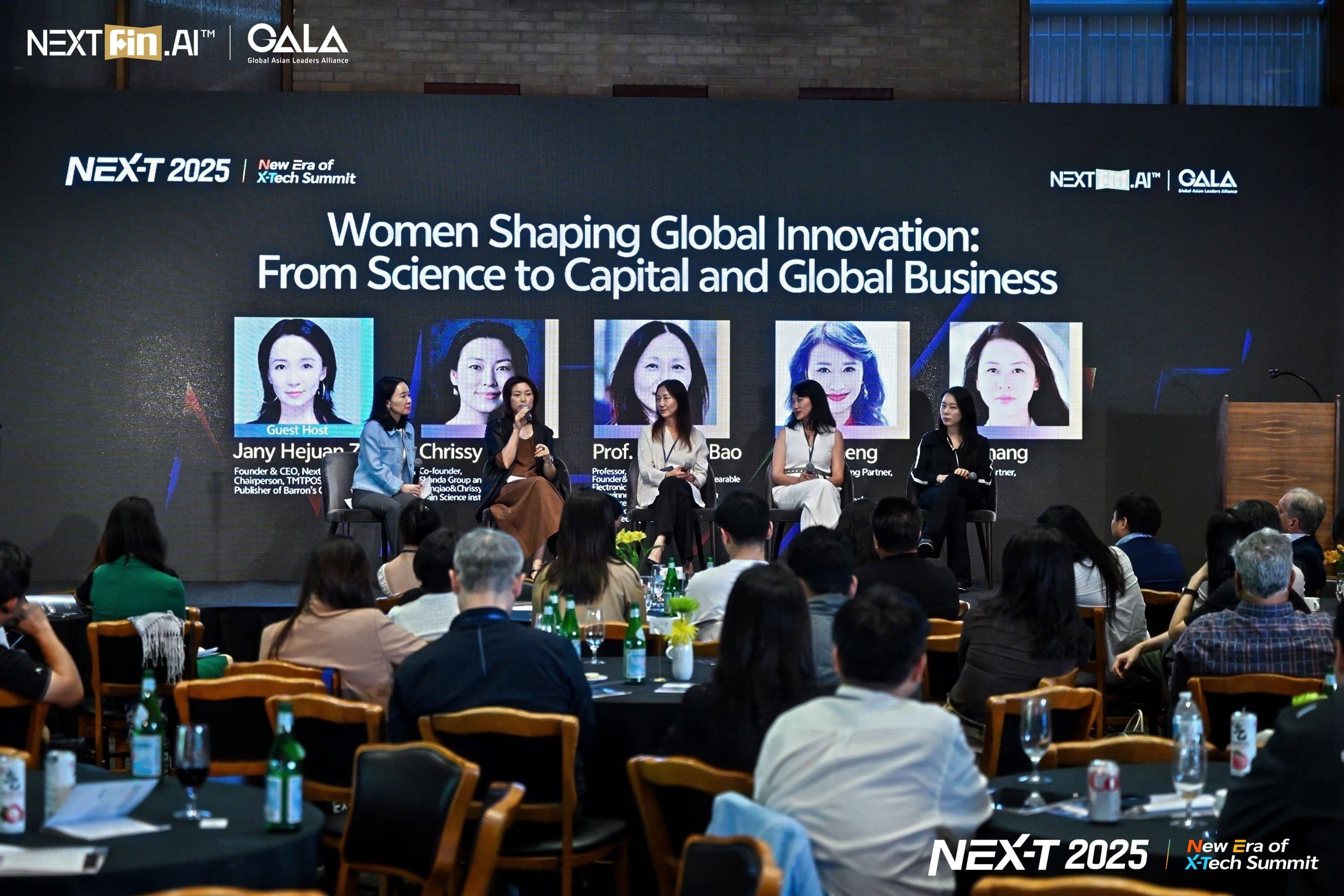
On-site photo
Self-leadership is the foundation for broader impact, said Chrissy Luo, the co-founder of Shanda Group and Tianqiao & Chrissy Chen Brain Science institute (TCCI), has said recently at the NEX-T Summit 2025 hosted by NextFin.AI and Global Asian Leadership Alliance (GALA) in Silicon Valley.
Leadership starts with taking ownership and executing with courage and wisdom. Even without formal authority, the leader’s initiative and commitment can inspire others and drive meaningful change, she said.
At the panel "Women Shaping Global Innovation: From Science to Capital and Global Business" on September 27, she joined discussions with Bao Zhenan, the founder & director of the Stanford Wearable Electronics initiative; Holly Zheng, the founding & managing partner of EnvisionX Capital andan adjunct professor at USC; and Lu Zhang, the founding partner of Fusion Fund.
"I feel that leadership is sometime not only that, how many people (you) lead, but more important (about) how you lead yourself, so make your job done. It's actually already amazing that when we practice our philanthropic, you know journey starts from zero, right? So we have to learn and start to conquer some very basic questions or challenges," she explained.
展开全文
Luo also shared how both personal curiosity and strategic foresight guided her philanthropic and entrepreneurial focus on brain science. "From a personal perspective, Tianqiao and I share a lot of curiosity to what happened when we make decisions, when we have emotional turbulence and also why and we are what we are, so the curiosity driven philanthropy, I think, is not always the most common in the field in our peer group, but I feel is probably can support you go to a long way because it's very inertial, and this is from your bottom of your heart," she said.
This curiosity-driven passion has shaped TCCI's mission and its research direction, allowing the institute to pursue innovative projects that address mental health challenges and neurodegenerative diseases while exploring ways to unlock human potential, she added.
Luo emphasized that strategic considerations also informed their focus. "As entrepreneurs, we believe brain research can not only help treat disease but also enhance creativity and learning. In the new era of AI, understanding the human brain becomes even more profound, especially as society grapples with questions about human relevance and purpose in a world where AI can replicate many human capabilities."
Reflecting on leadership, Luo noted the unique qualities women bring to innovation and entrepreneurship. "Women leaders often show more patience and collaboration. While we can learn from male counterparts about boldness and risk-taking, it's critical to retain compassion, inclusiveness, and patience, which are essential for building strong communities and sustainable enterprises."
Bao, also a professor at Stanford University and the winner of the UNESCO Women in Science Award, shared her perspective on navigating scientific research and professional development as a woman. "It's all about mindset," she said. "You can either let societal perceptions limit you or embrace your uniqueness and take confidence in what you do. Women are fewer in certain fields, but that can be a source of strength."
Bao, also a member of the U.S. National Academy of Engineering (NAE), pointed out that passion and genuine interest drive persistence. "If you work on things that excite you, it doesn't feel tiring, and you always feel energized. That's what keeps me going in research and life." She encouraged students to use their academic and professional journeys to discover what they are truly passionate about, noting that interests and goals evolve over time.
Zheng, also the chairwoman of BlueFocus International, shared her experience in building global businesses and leading across continents. "Globalization has always been central to my career," she said, recalling her early work at Cisco Systems and later at BlueFocus International, where she helped Chinese brands expand into global markets. Despite contemporary discussions of de-globalization, Zheng emphasized that the fundamental principles of globalization—scale, flexibility, and the integration of global and local insights—remain vital.
Zheng stressed the role of AI in enhancing human capability. "I am a strong believer that AI can make talent more fluent, enabling people to focus on creativity and leadership rather than repetitive tasks. Globalization and technological empowerment go hand in hand, creating opportunities for women and men alike."
Zhang recounted her journey from a material scientist to an entrepreneur and eventually a venture capitalist. Initially skeptical about venture capital (VC), she realized the power of VC to accelerate innovation. "VC is a catalyst. It allows you to connect technology, operational experience, and capital to support diverse innovators. My goal was never to be a traditional investor but to help transformative ideas reach their potential."
Zhang emphasized the importance of a global perspective, noting that Silicon Valley's success stems from attracting top talent from around the world. "Founders here think globally from day one. They are not just building the best company in the U.S.; they are building the best company globally."
相关文章
-

广发证券招标:财富经纪业务运营中心会议系统建设项目
-
伊朗副外长:伊朗代表团将前往伊斯兰堡参加谈判
-
巴拿马外长声称遭到报复,中国频繁扣押悬挂本国国旗的船只,要求尊重主权!
-
中山陵前,郑丽文11次点名日本,国台办送上定心丸,民进党破防了
-
广西钦州市钦南区通报:三娘湾景区确实存在“三无”船只非法载客出海观看海豚现象 即日起实施专项整治行动
-
“我准备倒闭了!”广东爆火鸡煲店老板再发声:你们去隔壁吧,我这是冰冻鸡,别来了;儿子:家里有养鸡场,最多还能撑一到两个月
-
山东一对夫妻花50万买法拍房,发现土地使用权证是假的,5年来无法过户,法院已移送警方侦查
-
半场战报-艾永阿里乌姆6分钟闪击 国足0射正0-2喀麦隆






评论